
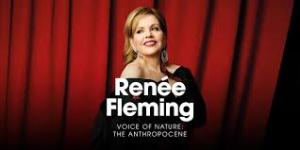
***RECOMMENDED*** Great artists seek inspiration from the most unlikely of sources. For the beloved American soprano Renée Fleming, processing the effects of constant isolation and quarantine following the recent global health pandemic, that solace was found in the tranquility of nature. After more than two decades of constant worldwide travel, appearing on the stages of the most respected opera houses, Fleming found herself suddenly and abruptly homebound and all previously arranged engagements canceled. With so much unexpected free time on her hands, she started taking long walks throughout her wooded community, "hugging trees" and just waiting -- and hoping -- for brighter days ahead. 3 SPOTLIGHTS
All of that time spent communing with Mother Nature caused Fleming to reflect on several centuries worth of music that have referenced the wonder and power of the natural world. Like a heroine in one of the Bronte sisters' novels, Fleming has had a life-long fascination with Nature (spelled with the uppercase, which is the way the Victorian authors demanded). Also, like Jane Eyre herself, Fleming endured hardships yet emerged victorious.
The product of all that roaming was the 2021 album "Voice of Nature" which Fleming curated with the help of Metropolitan Opera's Music Director Yannick Nezet-Seguin, who appears on the disc supporting Fleming's vocal stylings from the keyboard. "Voice of Nature" is an eclectic mix of selections from a vast array of diverse artists/composers as well as a fair amount of musical pieces which Fleming had specifically commissioned for this project.
Fleming has long been a champion in fostering artistic collaboration between distinct genres of music as well as narrowing the generational gap which exists between current creators. So don't be surprised when you hear the works of Handel and Rachmaninoff sharing the bill with Howard Shore ("Twilight and Shadow" from "The Lord of the Rings") and even Bjork.
After "Voice of Nature" won Fleming her fifth career Grammy Award, she felt that there was an element missing which was an impediment to just how effective this project could be. Having accepted an invitation to a dinner party at which she knew only the host, Fleming met Sam Deleon, a producer/editor at the National Geographic Society. That began a discussion in which Fleming was able to work directly with members of the National Geographic Society's cadre of photographers/videographers in order to create a film which would accompany Fleming's performance of the songs live in concert. Thus, "Voice of Nature: The Anthropocene" was born.
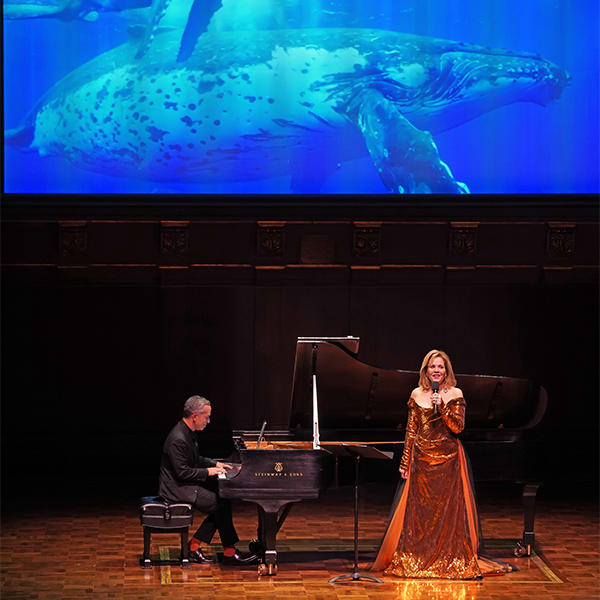
Much of this video montage focuses on the beauty and grandeur of nature, but it does also include more disturbing images of our majestic planet under duress. Scenes of verdant pastures and crystal-clear waterfalls are juxtaposed with the devastating effects of climate control: vast forests ravaged by wildfires, homes completely submerged under floodwaters, fields of dry and cracking soil caused by excessive drought. Fleming's still-impressive (and tremendously expressive) vocal abilities nicely contrast the more disturbing imagery.
If there is a single misstep in this section of "Voice of Nature: The Anthropocene" it would have to be the choice of song which concludes the program. While the sentiment of the lyric couldn't be more prescient, "What the World Needs Now Is Love" just seems too generic of a way to conclude this portion of the recital. Burt Bacharach and Hal David's pop hit has strong cultural connotations and the vocal arrangement presented here tested Fleming's range. Had it been set in a slightly lower key, it would not have challenged her upper register to such an extreme degree and may have produced a more satisfying finish.
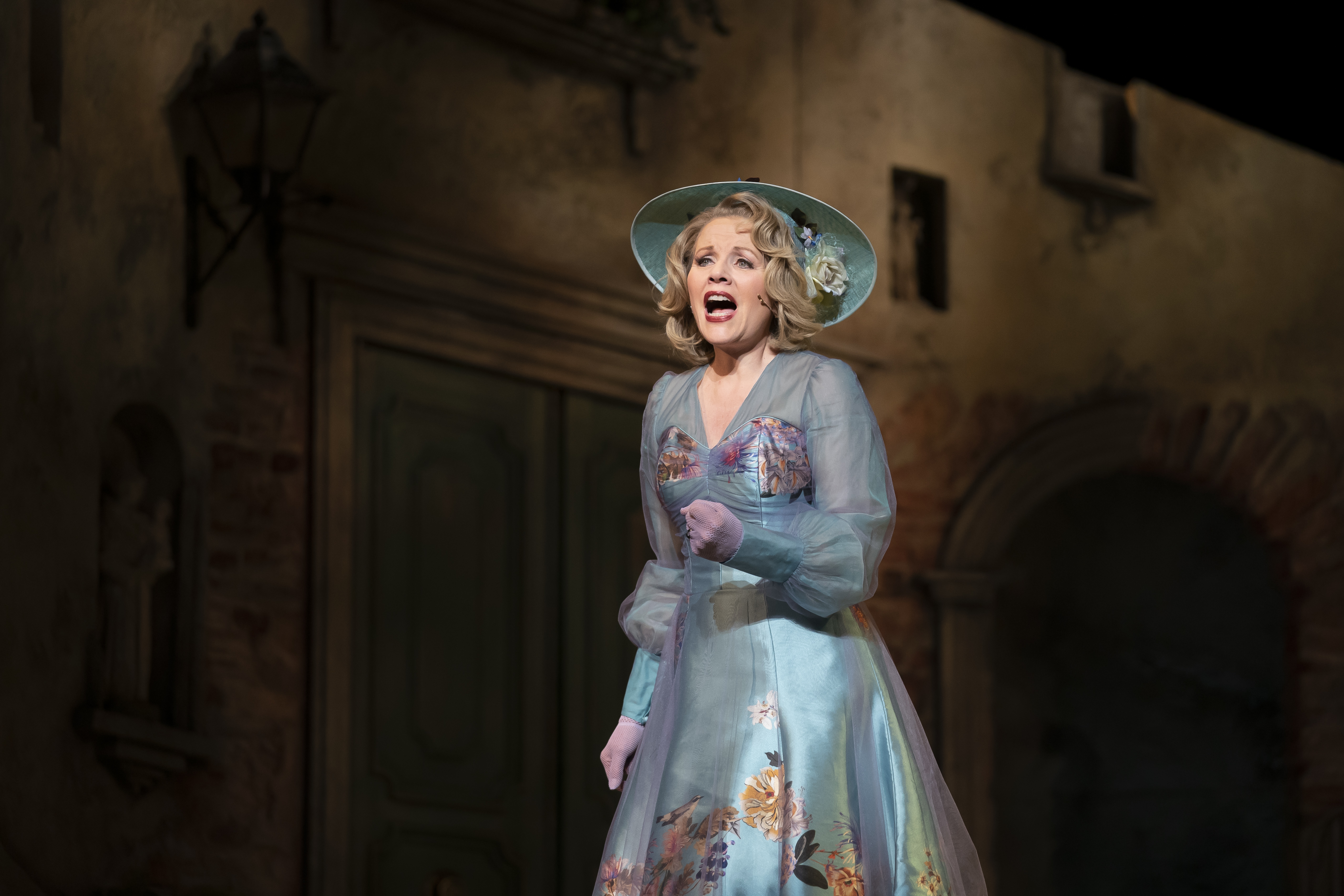
After a brief intermission, Fleming returned to the stage once again with pianist Inon Barnatan. This half of the program featured selections from both the operatic repertoire as well as Broadway showtunes. Fleming tends to gravitate towards the work of Handel, so you will hear arias from both "Semele" and "Sampson" and the aria "O mio babbino caro" from Puccini's "Gianni Schicchi" always seems to make an appearance when Fleming is performing in concert. Also, her love for the work of the American composer John Kander is particularly evident as she performs two selections from his show "The Visit" and music he had composed for the Ken Burns documentary "The Civil War."
Midway through the second half, Fleming left the stage so that Barnatan could be in the spotlight. He performed a mash-up of two of George Gershwin's greatest hits as arranged by Earl Wild for his "7 Virtuoso Etudes after Gershwin." Using only his left hand, Barnatan attacks the ebb and flow of "The Man I Love" and ever so gradually blends in accompaniment utilizing his right hand to transition into the syncopated accents necessary for "I Got Rhythm." It was a wonderful moment which allowed Barnatan to display his considerable virtuosity.
"The Voice of Nature: The Anthropocene" was a one-night-only event. If you missed it, do not despair. You can still seek out Renée Fleming's "The Voice of Nature" -- albeit without the added bonus of the stunning National Geographic imagery -- wherever you purchase or stream music.